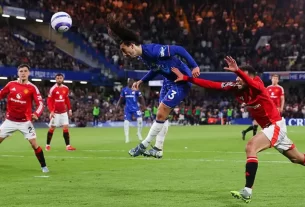
The world of football is in mourning. Diogo Jota, aged 28, forward for Liverpool FC and the Portuguese national team, tragically passed away in the early hours of Thursday, July 3rd, 2025, following a serious car accident on the A-52 highway in the Zamora region, northwest Spain. Also in the car was his brother, André Silva, 26, a player for Penafiel, who also died at the scene. The vehicle they were traveling in, a Lamborghini Huracán, veered off the road and caught fire, being completely consumed by flames. The information was confirmed by the Spanish Civil Guard in an official statement released the next morning (CNN Portugal, 2025).

According to the preliminary report, the strongest hypothesis is that the accident occurred during an overtaking maneuver, when one of the tires is believed to have burst. The blowout caused total loss of control, sending the vehicle off the road, where it rolled and ignited. The fire was so intense that it spread to nearby vegetation, requiring intervention by firefighters to contain the blaze. Neither of the brothers survived. Official identification of the bodies is being conducted through DNA testing, as confirmed by Zamora’s deputy mayor, Ángel Blanco García (G1, 2025).

The tragedy has reignited debate about the poor conditions of the A-52 highway, particularly the mountainous stretch through Sanabria, where the accident took place. According to Spanish newspaper La Opinión de Zamora, this same segment has received more than 40 formal complaints regarding asphalt conditions in 2024 alone. These complaints, addressed to the Spanish Ministry of Transport and Sustainable Mobility, cite dangerous curves, poor visibility, and a lack of maintenance, factors that significantly increase the risk of fatal road accidents in the region (La Opinión de Zamora, 2025).
Another key detail that drew the attention of authorities was Diogo Jota’s decision to travel by car from England to Portugal and back. In an interview with Record, respiratory physiotherapist Miguel Gonçalves, who oversaw Jota’s treatment, revealed the player had recently been diagnosed with a pneumothorax, a lung condition that led doctors to forbid air travel. To avoid the risk of pressure-related complications during flight, he chose to make the 20-hour journey by car, which included a ferry crossing from Plymouth (UK) to Santander (Spain) (Record, 2025).
Gonçalves also reported that Jota was nearly fully recovered and excited for the upcoming season. “He was no longer in pain. He was confident, optimistic about the future, and had left Portugal after one last lunch with his wife and children,” said the physiotherapist. The return trip reportedly began around 8:30 p.m. on Wednesday (2nd), and the player planned to rest in Burgos before heading to the ferry, scheduled to depart at 11 a.m. on Thursday. Unfortunately, he and his brother never made it to their final destination, Liverpool, where he was expected to rejoin the team by July 4th (G1, 2025).
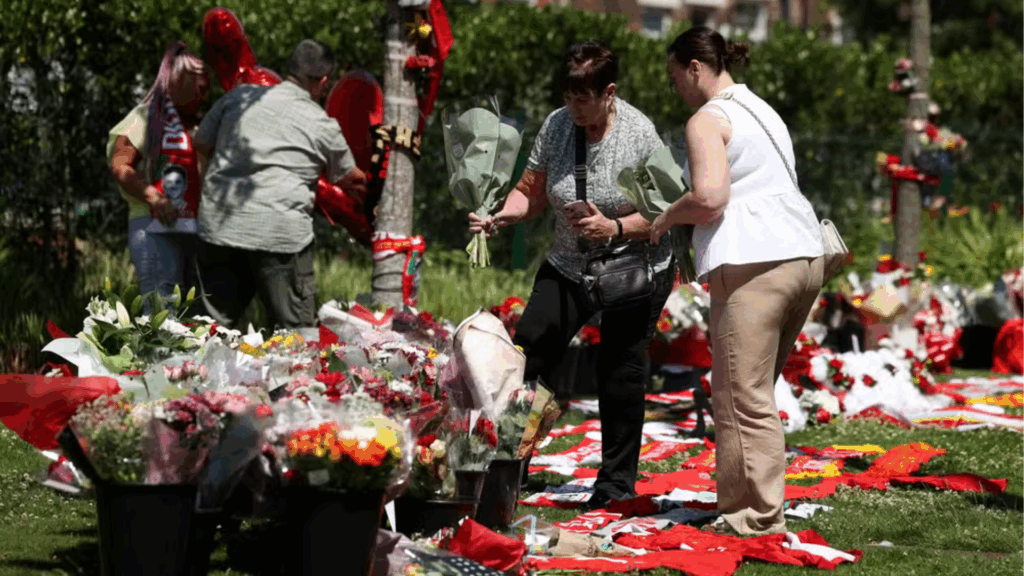
The untimely death of Diogo Jota has caused deep sorrow across the football community. The Portuguese national team coach paid tribute, calling him a “national hero.” Rival clubs like Manchester United declared mourning, and UK Prime Minister Keir Starmer issued a statement of condolences, emphasizing the athlete’s impact not only in sports but also as a role model for youth. On social media, the hashtag #RIPJota trended globally for over 24 hours following the tragic announcement.
Having married Rute Cardoso just two weeks ago with whom he shared three children Jota was enjoying a period of personal happiness. The couple had held an intimate wedding ceremony in Portugal. Family photos were posted to social media on June 26, just days before the tragedy. On the field, Jota was at the peak of his career. Just last month, on June 9, he helped Portugal win the UEFA Nations League, scoring in the final against Spain. He had 14 goals in 47 caps for the Portuguese national team (UEFA, 2025).

Born in Massarelos, Porto, Jota began his career at Paços de Ferreira, then played for FC Porto, and later gained prominence at Wolverhampton in England, before signing with Liverpool in 2020. At the English club, he was a key figure in winning the Premier League, FA Cup, and Carabao Cup, in addition to several memorable Champions League campaigns. At just 28, he was considered one of the most complete players of his generation, known for his ability to operate in multiple attacking positions.
The international sports community remains in mourning over the irreparable loss of Diogo Jota. UEFA, FIFA, the Portuguese Football Federation, Liverpool FC, and dozens of clubs and athletes from around the globe have issued tributes in the past few hours. A minute of silence will be held before matches across several European leagues this weekend. The player’s funeral will be held in a private ceremony in Porto, with a date yet to be announced.